Components and entities
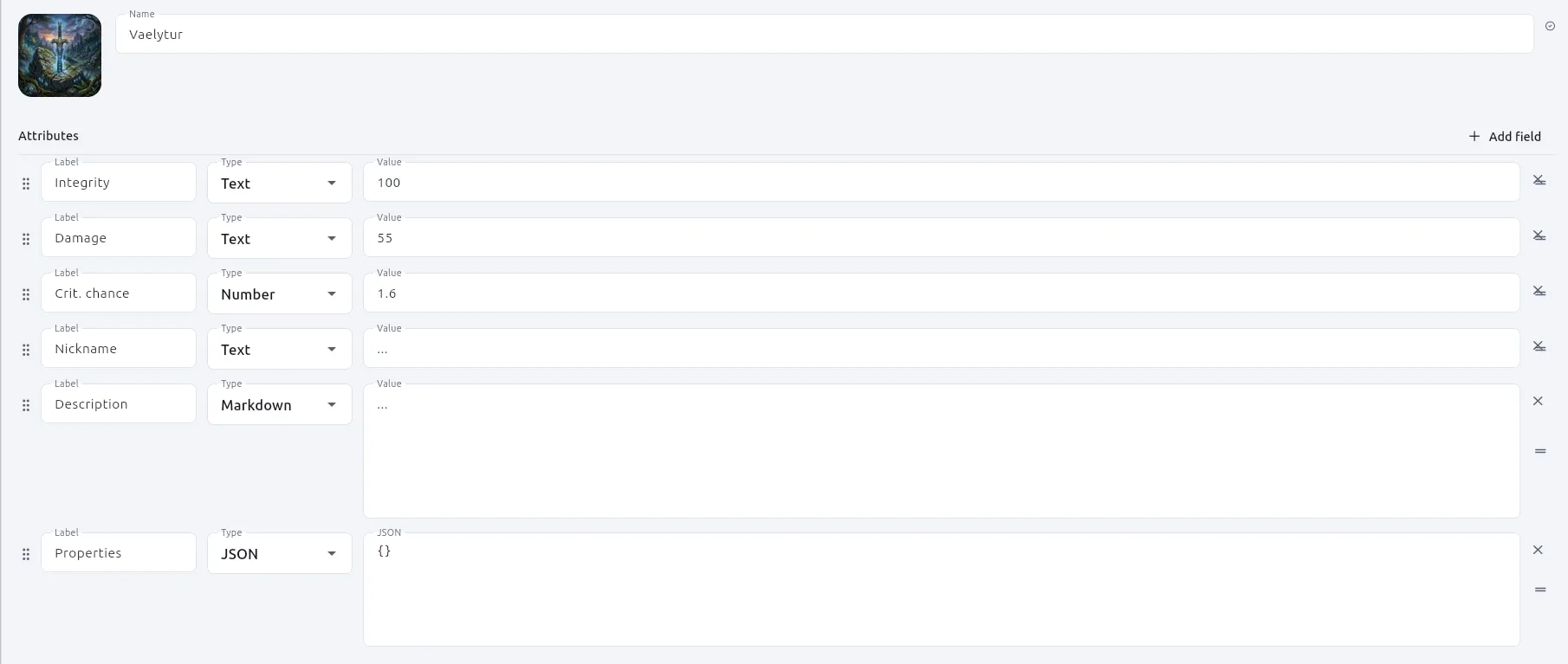
A component is a character, a weapon, a place, a faction: a name, an optional cover picture, and an ordered list of typed attributes. There is deliberately no schema behind it — add what this story needs.
An entity is one the story has made. A component says what a goblin is; an entity is this goblin, with its own hit points, that a later board can find again by name. Nothing a playthrough makes is written into your story: entities live in the campaign window, and a saved game is what carries them past closing it.
The file
Section titled “The file”{ "name": "Goblin", "cover": "art/goblin.png", "attributes": [ { "label": "HP", "type": "int", "value": 7 }, { "label": "Alive", "type": "bool", "value": true }, { "label": "Bio", "type": "markdown", "value": "A small, angry thing." }, { "label": "Loot", "type": "assetList", "items": ["art/gold.png"] } ]}Attribute types are string, markdown, int, float, bool, json,
componentList and assetList — those wire names, because a script reading
the file should not have to know what the code calls them. Numbers and
booleans are JSON numbers and booleans, never strings; a json attribute is
stored decoded; the two list types carry items.
Paths in the file — the cover, an assetList item — are measured from the
project root, so a folder can be renamed and a component dragged into it and
every picture still points where it did. That is what makes a component file
format 2: an older one is lifted when it is opened or moved, and a 1.3.0
build refuses a newer component rather than misreading it.
A cover picked from outside the project is copied into .ripple/external/
first, so the file never records a path that only works on one machine.
Copying in is a switch — Toggle importing outside assets, from the palette
— and with it off the file is linked instead. A cover still outside the project
says so where it is: a caution under the field, with Copy into project
beside it, and Messages names every such link when the project is opened,
since a project cloned onto a machine that has not got the file should hear
about it on every open rather than once on the day the link was made.
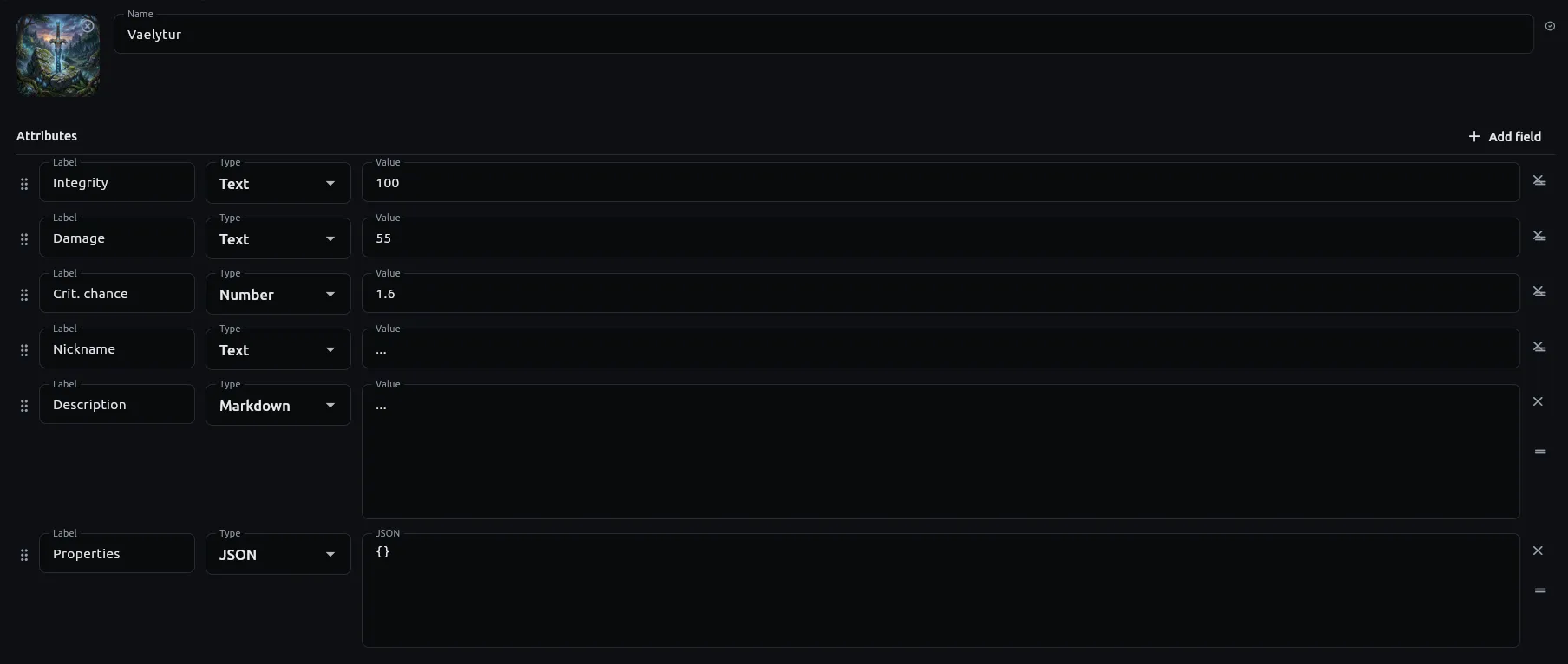
The editor is a form over this: a name, a cover, and a row per attribute with its type and its value. Rows reorder by drag.
On a board
Section titled “On a board”Drag a *.component.json out of the file tree onto a board and it becomes a
Component node with one typed output per attribute, plus one carrying the
whole component as a map. The node has two modes, and it says which it is in:
- Reference is a window onto the file. Outputs, and nothing else.
- Entity makes the story a thing, keyed by the name on the node. Two nodes with two names are two independent swords; a node on a later board naming the same entity is the sword the first board made. Attribute inputs appear alongside the outputs, which is why there is no Set/Get pair — a second node naming the same entity later in the story is the setter.
A Component node whose name is wired from upstream makes one entity per name it is handed, so a loop forging a sword a turn forges a sword a turn.
Three more nodes work on entities:
- Spawn makes many at once. Point it at a component, say how many, and choose how they are told apart — numbers or letters, and what goes between. “Goblin” with numbers and a dash makes Goblin-1, Goblin-2, and so on, and hands their names on as a list so a script can give each one its own hit points. It makes the same ones every time: coming back to a Spawn node finds the goblins it already made rather than six more, so a paused campaign resumes into the encounter it left. A second wave wants a different name.
- Delete Entity forgets one by name — the goblin is dead, the potion is drunk. Deleting a name nothing answers to is not an error; it removes nothing and the story carries on. The component file is untouched, so a node naming it later makes a fresh one.
- Entity Exists answers whether the campaign still has one. Wire that into an If and the story decides for itself what a missing sword means.
In the campaign window
Section titled “In the campaign window”The Entities panel shows everything the story has made, grouped under the component each came from, with a count on each heading and a search line that finds one by name — or a component’s name to find everything made from it. Every row has a bin on it. Nothing is asked first: a playthrough is ephemeral and the component file is untouched, so what is lost is what this session did to that one sword. Doing it offers Start over from then on.
From Python
Section titled “From Python”component_get("Goblin") answers the whole definition, types and all;
entity_create, entity_set, entity_rename and entity_delete do from a
Script node what only a node on the board could do before. A passage may read
and not write — a state change should be something you can point at on the
canvas. The whole surface is in the
reference.