Nodes
Every card the Create menu offers, grouped as it groups them. For each: what
it is for, in the card’s own words; what is on the card; the ports it takes
and the ports it answers on; and, where one exists, something to read. An
agent gets the same list for the build it is talking to from node_types.
A port carries either flow — the story, pushed from card to card — or a
value, pulled when a card needs it. The boards
overview says how the two are
run and the one rule that follows. Every card’s way in is exec unless the
table says otherwise, and every value port is typed: a number joins a
number, any joins anything.
Where the card’s own literal and a wire both answer a port, the wire wins, and the field on the card disappears while the wire is attached.
Every card can carry metadata of your own. Right-click it and choose
Edit metadata…: a list of names, types and values — the Input node’s types,
plus json for anything nested — and a small tag on the card’s header while
there is any. Nothing on the board reads it; it is yours, for a status, a
reviewer’s note, a mark for a tool of your own. It travels with the node into
a compiled campaign and to an agent, and a copied node arrives with its notes.
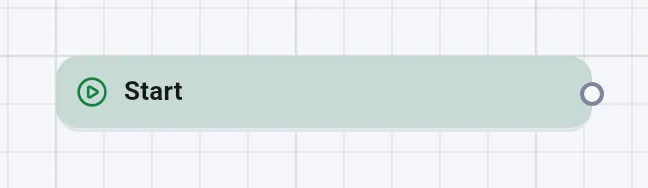
Where the story begins.
A marker: it holds no text of its own, only the single wire that leaves it.
Answers
| Port | Carries | Meaning |
|---|---|---|
out |
flow |
The single wire the story leaves by. |
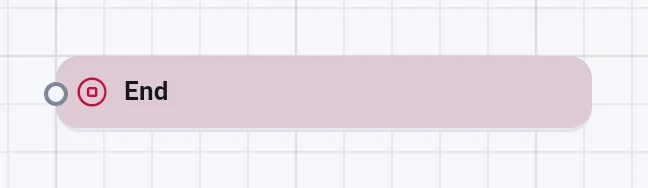
Where a path stops.
Its input accepts any number of wires, so every branch of a story can finish at the same ending.
Takes
| Port | Carries | Meaning |
|---|---|---|
in |
flow |
Any number of wires; every branch can finish here. |
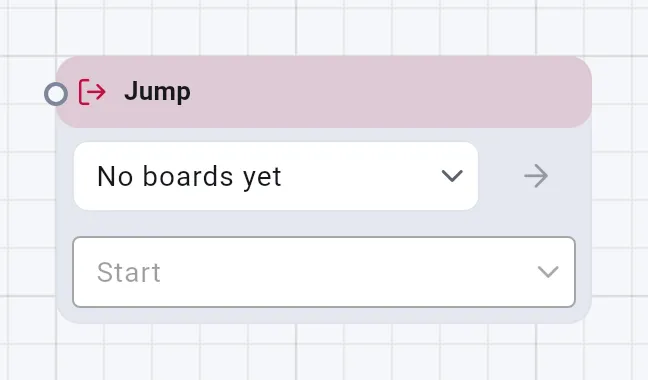
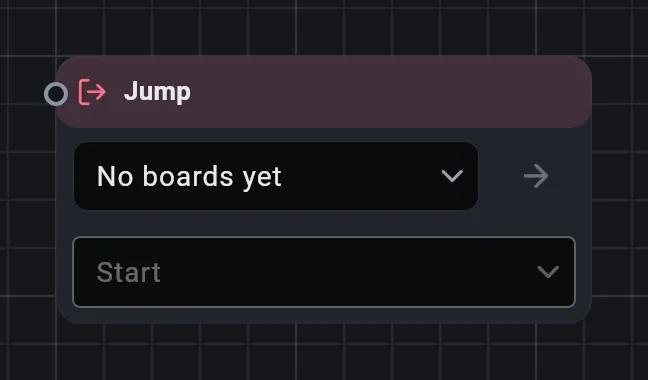
Continues the story on another board.
Pick the board it goes to, and use the arrow to open that board here. It is how a chapter hands over to the next one, and how a session joins onto the one before it.
It has no output: what happens next happens on the board it names.
Leave Node on Start to begin that board at the beginning, or name a node to resume partway in — which is how a chapter can be re-entered without replaying it.
On the card: Board; Node — leave it on Start to begin that board at its beginning, or name a node to resume partway in.
Takes
| Port | Carries | Meaning |
|---|---|---|
in |
flow |
The way in. There is no way out: what happens next happens on the board it names. |
Read more: Reading a story back
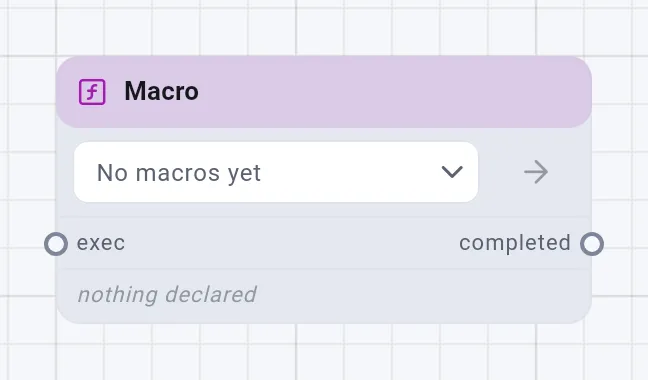
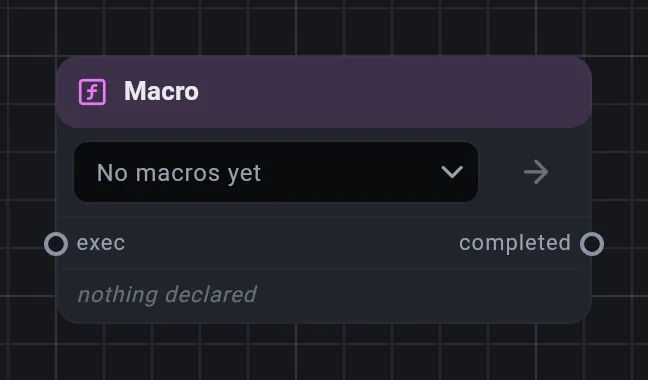
Runs a macro here — a board a board can call.
Drag a macro out of the file tree and drop it on the canvas, or pick one here. It grows an input per thing the macro takes and an output per thing it answers, and the flow carries on where the macro ends.
Wire a take, or type it on the card; the wire wins.
The macro is spliced in when the campaign is compiled, so calling one twice is two copies of it and a macro cannot call itself.
On the card: Macro.
Takes
| Port | Carries | Meaning |
|---|---|---|
exec |
flow |
The way in. |
Answers
| Port | Carries | Meaning |
|---|---|---|
completed |
flow |
Taken where the macro reached its Macro Out. |
Plus one input per thing the macro takes, with a field beside it to type a literal, and one output per thing it answers.
Read more: Macros
Do all
Section titled “Do all”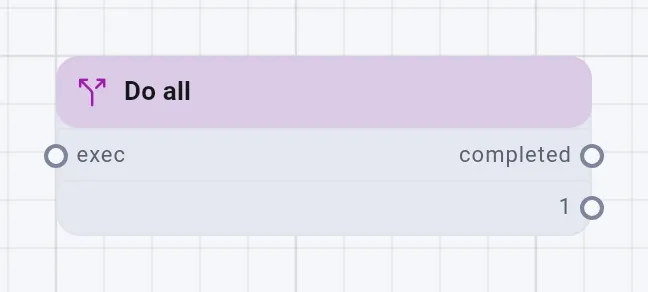
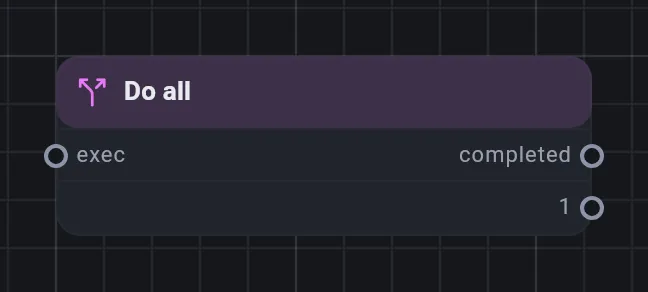
Runs everything wired to it, one branch after another, then carries on from completed.
Wire the last branch and another appears beneath it, so it grows as many as you need. They run top to bottom, each to the end of its wire before the next starts — a passage on a branch holds the branches below it until every passage reachable from it has been read. So put the jobs on the branches and the story on completed: it fires once every branch has run out.
For the bookkeeping a story needs before a passage: three things to set up, side by side, and then the passage.
Takes
| Port | Carries | Meaning |
|---|---|---|
exec |
flow |
The way in. |
Answers
| Port | Carries | Meaning |
|---|---|---|
branch … |
flow |
One per branch, run top to bottom; wire the last and another appears. |
completed |
flow |
Taken once every branch has run out. Boards written before it had one grow the port the moment they open. |
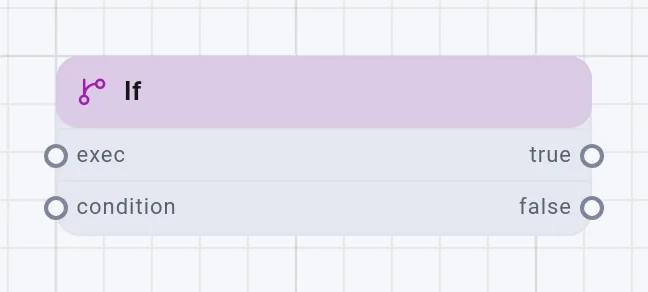
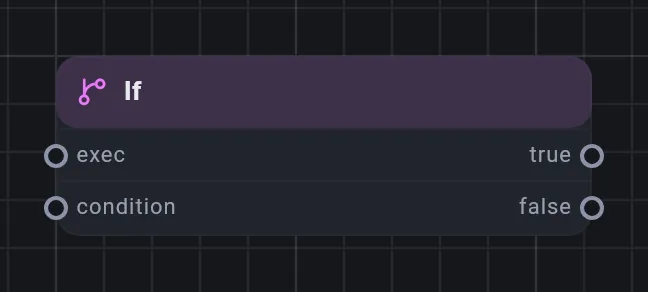
Sends the flow one of two ways, on a yes or no wired into it.
It asks nothing itself: condition takes a true-or-false from somewhere else, usually a Comparator. That is what makes it the piece a While or a For has been waiting for — wire true back into continue and false into break.
Takes
| Port | Carries | Meaning |
|---|---|---|
exec |
flow |
The way in. |
condition |
bool |
True or false, usually from a Comparator. |
Answers
| Port | Carries | Meaning |
|---|---|---|
true |
flow |
Taken when the condition is true. |
false |
flow |
Taken when it is false. |
Switch
Section titled “Switch”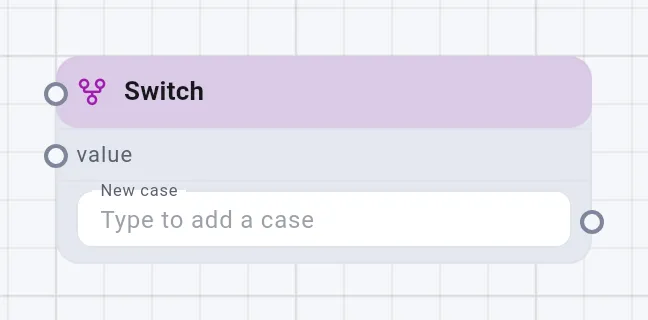
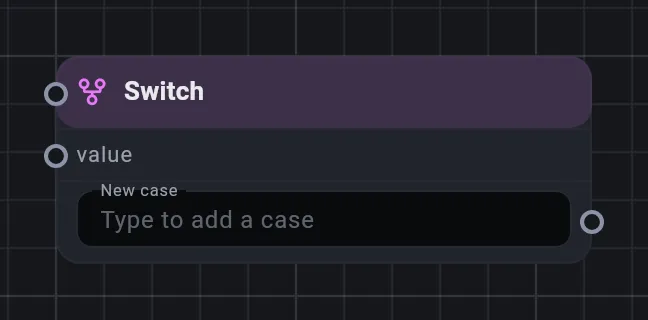
Sends the flow down one branch of several, by name.
Type into the last row and another appears beneath it, each with its own way out. Clear the last one again and it goes away.
Wire the thing being decided into value. Cases are matched as text: a number is compared as the digits you would write it with, so 42 and “42” are the same case.
Nothing matching is not an error and not a fall-through — the story simply stops there. A branch nobody wrote is worse than a branch that is plainly missing.
On the card: one row per case.
Takes
| Port | Carries | Meaning |
|---|---|---|
in |
flow |
The way in. |
value |
any |
The thing being decided. Matched as text, so 42 and “42” are one case. |
Answers
| Port | Carries | Meaning |
|---|---|---|
case … |
flow |
One way out per row. Type into the last row and another appears; nothing matching stops the story there. |
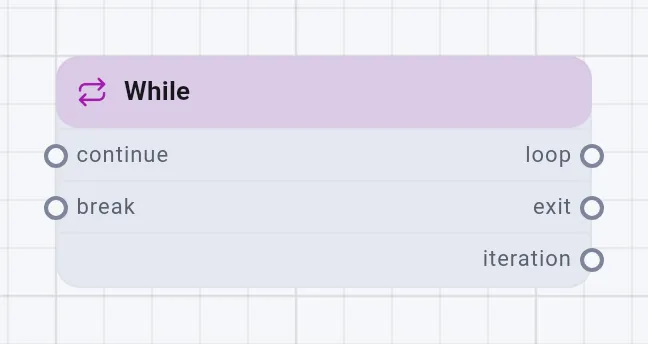
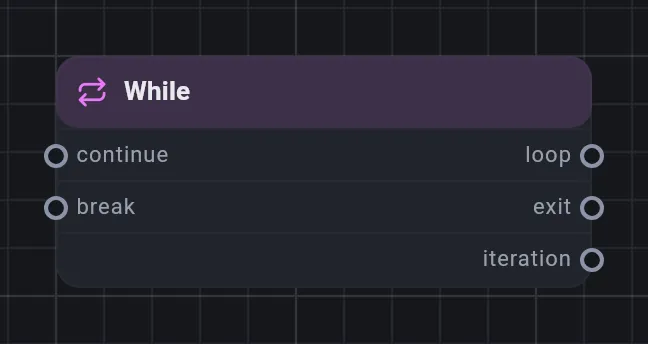
Repeats a stretch of the story.
Wire the end of the loop back into continue and it goes round again through loop. Wire something into break and it leaves through exit.
It holds no condition of its own: what decides is whatever you wired to those two inputs.
Takes
| Port | Carries | Meaning |
|---|---|---|
continue |
flow |
Wire the end of the loop back here to go round again. |
break |
flow |
Wire something here to leave. |
Answers
| Port | Carries | Meaning |
|---|---|---|
loop |
flow |
Taken on every pass. |
exit |
flow |
Taken on break. |
iteration |
number |
Which pass this is, counting from zero. |
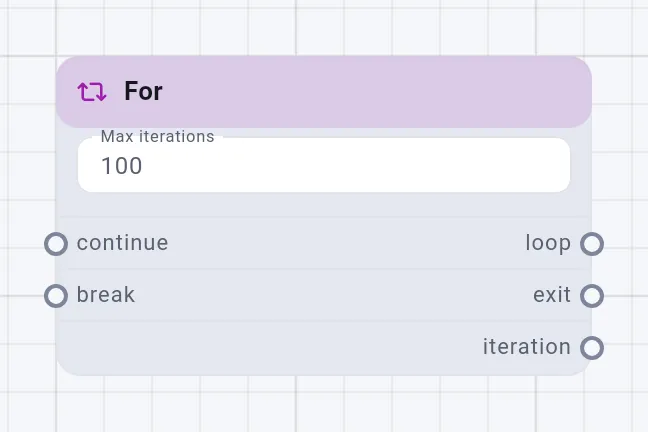
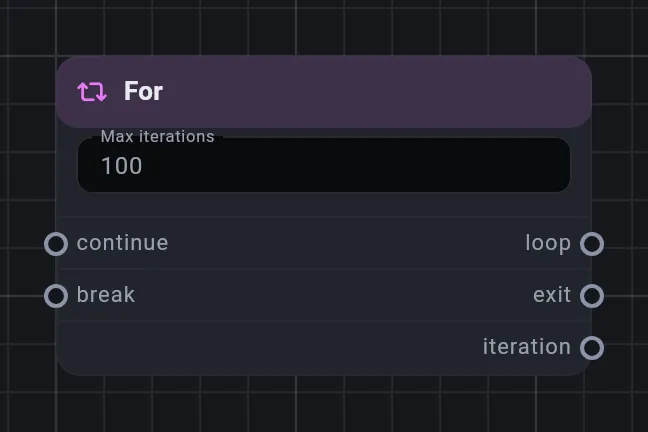
Repeats a stretch of the story, but not forever.
The same two ways in and two ways out as a While. What it adds is a ceiling: once it has gone round that many times it leaves through exit whatever the graph says.
It is the loop to reach for when the condition is somebody else’s and you would rather not find out the hard way that it never comes false.
On the card: Max iterations — the ceiling, default 100.
Takes
| Port | Carries | Meaning |
|---|---|---|
continue |
flow |
Wire the end of the loop back here to go round again. |
break |
flow |
Wire something here to leave early. |
Answers
| Port | Carries | Meaning |
|---|---|---|
loop |
flow |
Taken on every pass. |
exit |
flow |
Taken on break, or once the ceiling is reached. |
iteration |
number |
Which pass this is, counting from zero. |
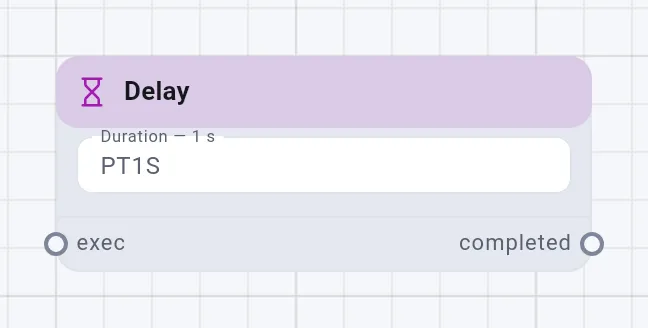
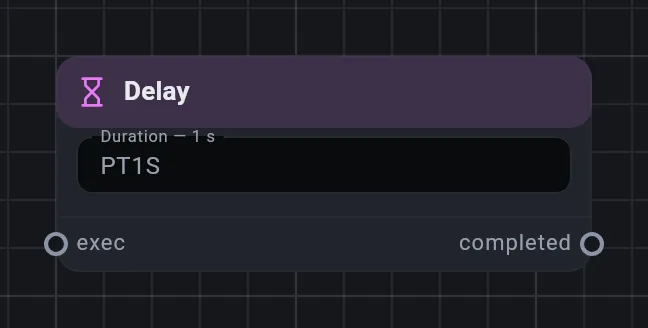
Holds the story for a while, then carries on.
The wait is written the ISO 8601 way: PT2S is two seconds, PT1M30S a minute and a half, P1DT12H a day and a half. Years and months are not a length of time and are refused.
The last passage stays on screen while it waits. An agent playing the story, or a test, does not wait at all.
On the card: Duration — default PT1S.
Takes
| Port | Carries | Meaning |
|---|---|---|
exec |
flow |
The way in. |
Answers
| Port | Carries | Meaning |
|---|---|---|
completed |
flow |
Taken when the wait is over. |
Read more: ISO 8601 durations
FlipFlop
Section titled “FlipFlop”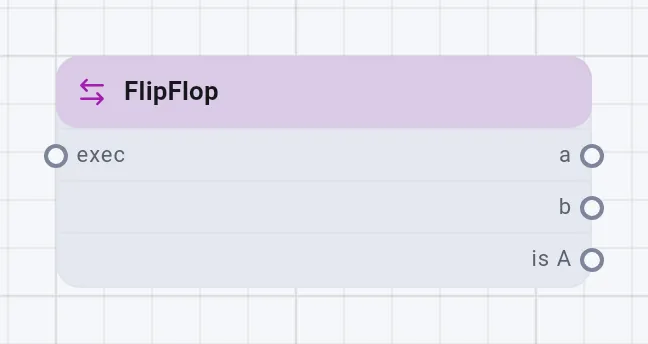
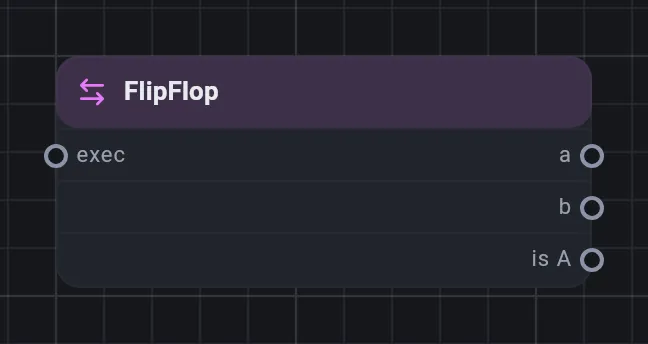
Takes one way out, then the other, then the first again — every time the flow reaches it.
The first visit goes out of a. is A is true while a is the side running. It remembers for the whole playthrough: leaving the board and coming back, or saving and loading, does not reset it. Starting over does.
Takes
| Port | Carries | Meaning |
|---|---|---|
exec |
flow |
The way in. |
Answers
| Port | Carries | Meaning |
|---|---|---|
a |
flow |
Taken on the first visit, and every second one after. |
b |
flow |
Taken on the visits in between. |
isA |
bool |
True while a is the side running. |
Read more: What remembers, and for how long
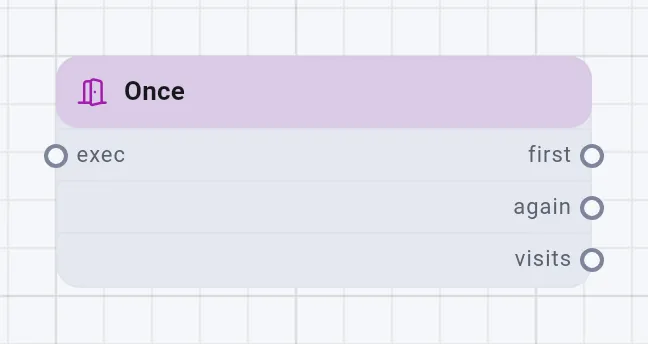
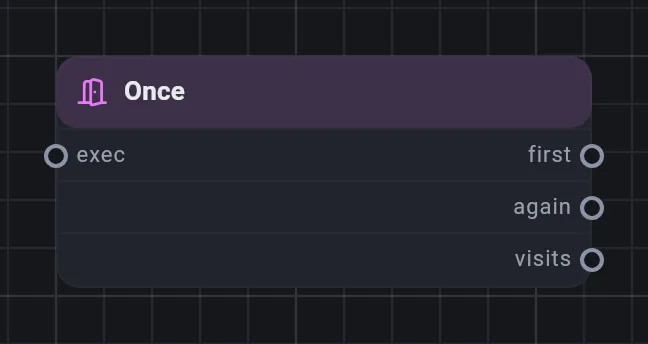
The first time the flow reaches it goes out of first; every time after goes out of again.
visits is how many times so far, counting this one, so a Switch on it can tell the third visit from the second. It remembers for the whole playthrough: leaving the board and coming back, or saving and loading, does not reset it. Starting over does.
Takes
| Port | Carries | Meaning |
|---|---|---|
exec |
flow |
The way in. |
Answers
| Port | Carries | Meaning |
|---|---|---|
first |
flow |
Taken on the first visit only. |
again |
flow |
Taken on every visit after. |
visits |
number |
How many visits so far, counting this one. |
Read more: What remembers, and for how long
State machine
Section titled “State machine”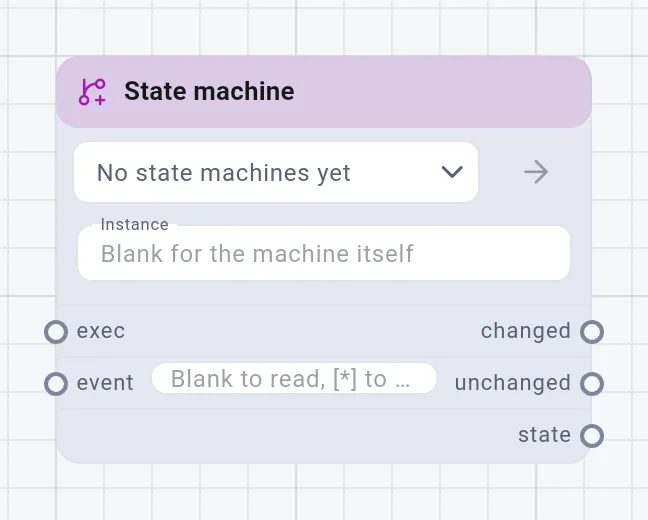
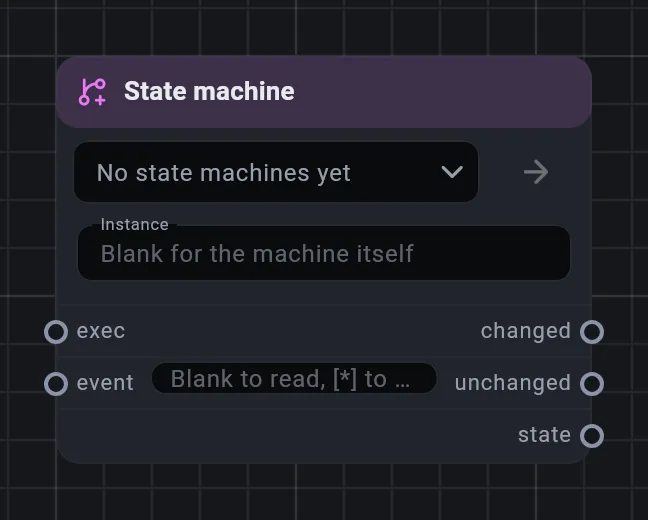
Fires an event at a state machine and says what state it is in.
The machine is a .fsm.mmd file — a mermaid state diagram. event is what to fire, from the card or from a wire; leave it blank to read the state without moving. [*] puts the machine back at its start.
changed is taken when an arrow fired, unchanged when none did — which is not an error. state is where the machine is now; a Switch on it is how the story branches.
instance names which one: leave it blank and every node driving this machine drives the same one. It remembers for the whole playthrough, across boards and saves; starting over forgets.
On the card: Machine; Instance; Event — blank reads the state without moving.
Takes
| Port | Carries | Meaning |
|---|---|---|
exec |
flow |
The way in. |
event |
string |
What to fire; blank reads the state without moving; [*] resets. A wire beats the card. |
Answers
| Port | Carries | Meaning |
|---|---|---|
changed |
flow |
Taken when an arrow fired. |
unchanged |
flow |
Taken when none did — not an error. |
state |
string |
Where the machine is now. |
Read more: Finite state machines · Mermaid state diagrams · State machines in Ripple Effect
Variable branch
Section titled “Variable branch”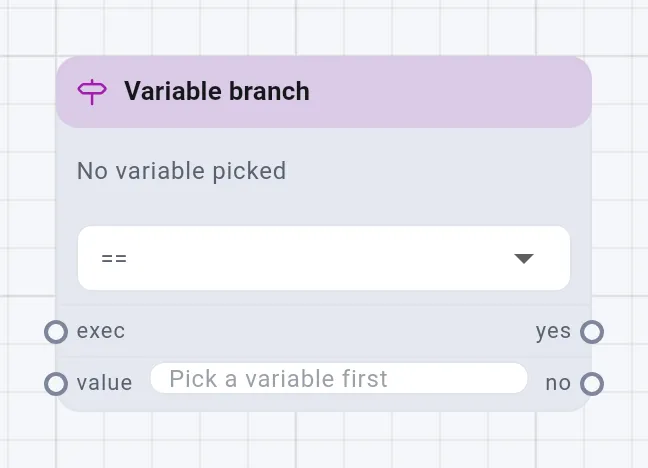
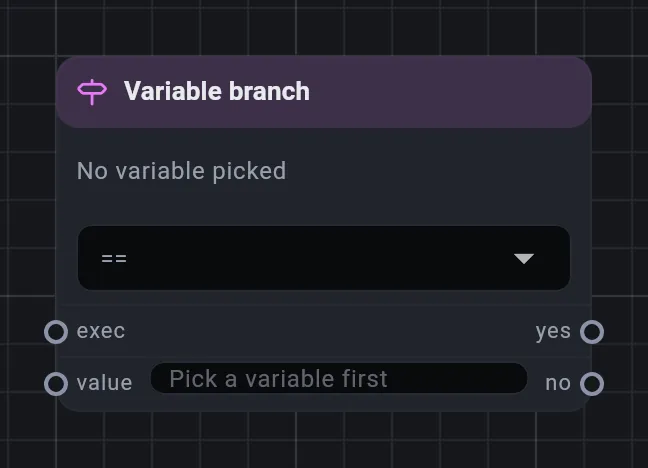
Sends the flow one of two ways depending on a console variable.
Pick the variable, a comparison, and what to compare it against — on the card, or wired into value. The comparison is the Comparator’s: equality goes through text, so 42 and “42” are equal, and only two numbers or two strings order.
A Get variable node into a Comparator into an If does the same in three cards; this is the one card for the common case, a story that branches on a flag.
On the card: Variable; Comparison — the same set a Comparator offers, default equal; Value.
Takes
| Port | Carries | Meaning |
|---|---|---|
exec |
flow |
The way in. |
value |
any |
What to compare the variable against. A wire beats the card. |
Answers
| Port | Carries | Meaning |
|---|---|---|
yes |
flow |
Taken when the comparison holds. |
no |
flow |
Taken when it does not. |
Read more: Console variables
Narration
Section titled “Narration”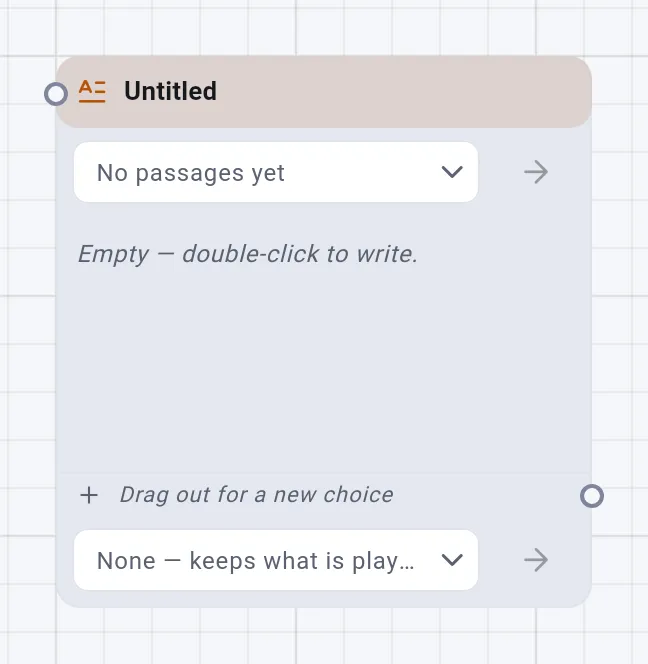
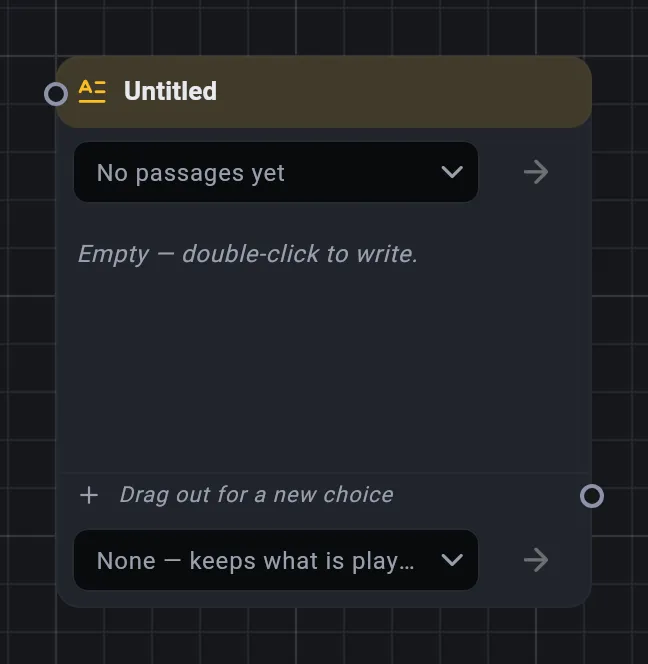
A passage of prose, in every language the project is written in.
The text lives in a localised passage beside the board rather than on the node, so one passage can be read by several nodes and a translator can work on it in any editor. The card shows the first few rendered lines of the story’s own language; double-click it to write.
It always carries one spare choice at the bottom. Wire that one up and another appears beneath it, so a passage grows as many branches as the reader needs. Click a choice’s row on the card to give it a name, which is what the card shows, and its words, which are what the reader is offered — in every language the story is written in.
A soundscape — a timeline of music and sounds, a file of its own — plays from the moment this passage is shown, and stays in force through every passage after it until one brings its own: a tavern goes on being a tavern. A passage with none changes nothing; a passage set to Silence stops whatever is playing. A soundscape marked tied belongs to its passage and stops when the story moves on.
On the card: Passage — which passage file the card reads; New makes one beside the board; Soundscape — None, Silence, or one of the project’s soundscapes; Body — the passage, in the language you are writing in.
Takes
| Port | Carries | Meaning |
|---|---|---|
in |
flow |
The way in, at the title. |
Answers
| Port | Carries | Meaning |
|---|---|---|
choice … |
flow |
One per choice, in order; always one spare at the bottom. The words the reader sees are set on the row, per language. |
Read more: Passages and languages, Soundscapes and sounds
Output
Section titled “Output”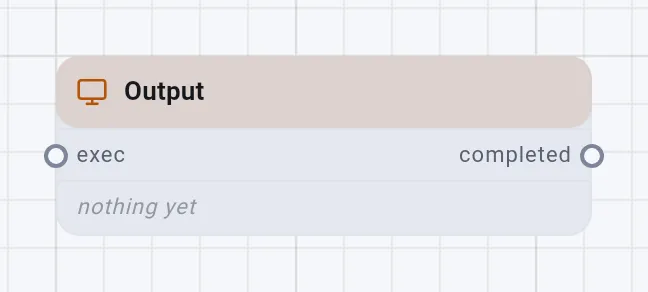
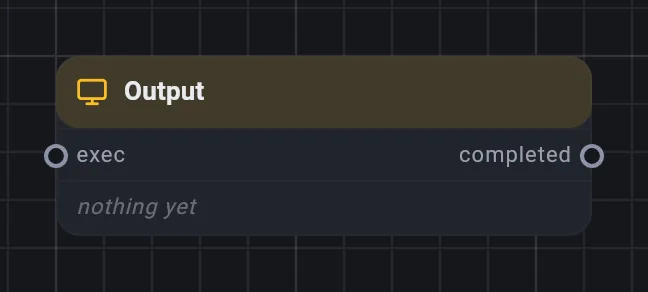
Shows values the story worked out.
Double-click to say what it shows — a name and a type per row — and it grows a port per name. Wire a Script node’s outputs into them.
It is a slide with one way on, so it reads as a passage rather than as a debugger.
On the card: Shows.
Takes
| Port | Carries | Meaning |
|---|---|---|
exec |
flow |
The way in. |
Answers
| Port | Carries | Meaning |
|---|---|---|
completed |
flow |
Taken when the reader moves on. |
Plus one input per name in Shows, typed as the shape says.
Read more: Python scripting
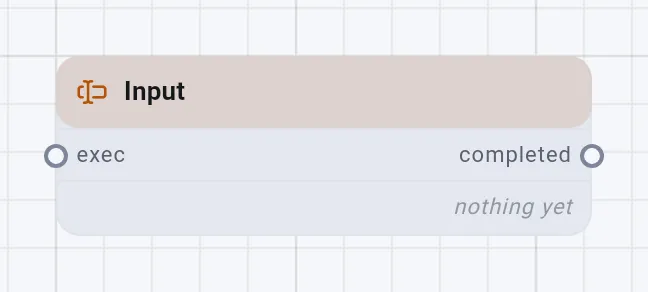
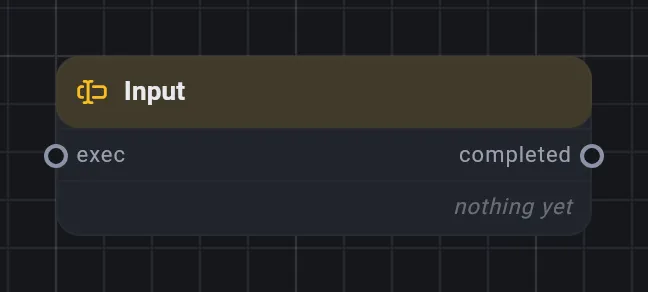
Asks the reader for values.
Double-click to say what to ask for — a name and a type per row — and it grows a port per name, carrying what was typed. A bool is a switch, a number a number field, a list a line of comma-separated values.
It is a form with one way on. Say what you are asking, and why, in the passage before it.
On the card: Asks.
Takes
| Port | Carries | Meaning |
|---|---|---|
exec |
flow |
The way in. |
Answers
| Port | Carries | Meaning |
|---|---|---|
completed |
flow |
Taken when the reader submits the form. |
Plus one output per name in Asks, typed as the shape says, carrying what the reader typed.
Read more: Playing a campaign
Play sound
Section titled “Play sound”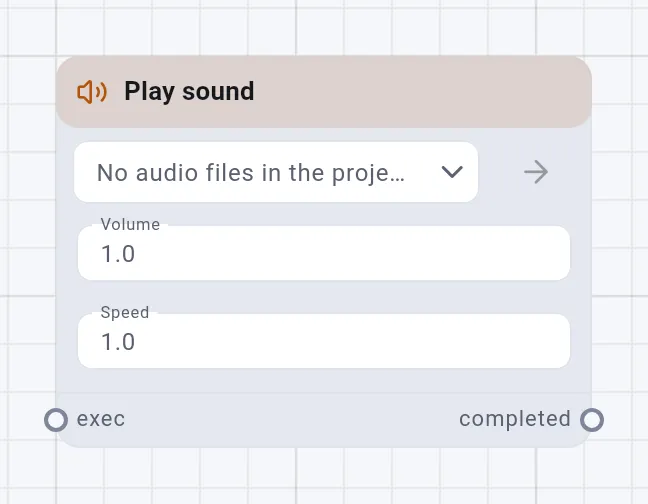
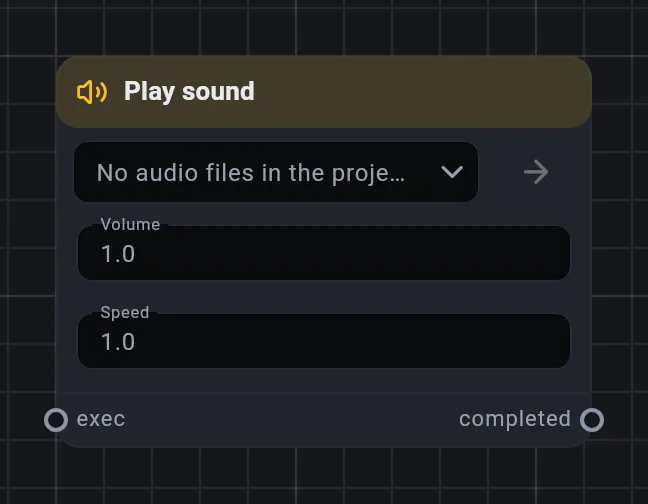
Plays one sound, once, and carries straight on.
The file is any audio in the project — drop one into the folder and it is in the list. Volume runs from 0 to 1 and speed from a little above 0, 1 being the file’s own.
Nothing waits for it: completed fires the moment the sound is cued, so a door slams and the next passage is already showing. For music under a scene, set a soundscape on the passage instead.
On the card: Sound — any audio file the project holds; Volume — default 1.0; Speed — default 1.0.
Takes
| Port | Carries | Meaning |
|---|---|---|
exec |
flow |
The way in. |
Answers
| Port | Carries | Meaning |
|---|---|---|
completed |
flow |
Taken the moment the sound is cued, not when it ends. |
Read more: Soundscapes and sounds
Number
Section titled “Number”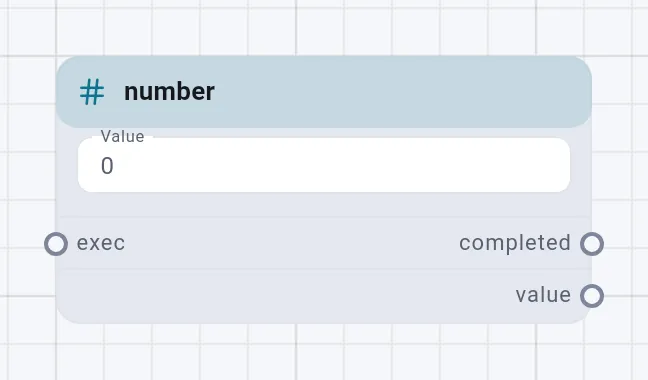
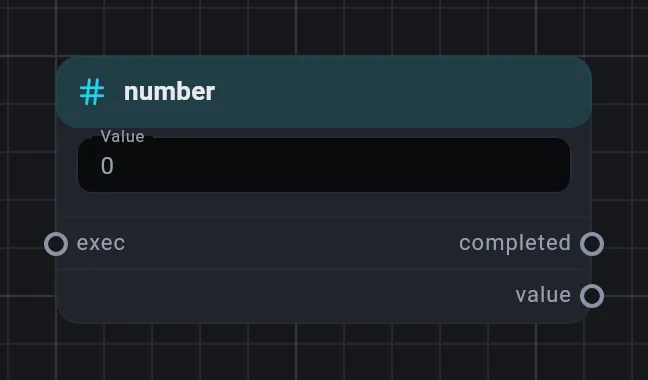
Holds a number for the rest of the board to read.
Wire value into whatever needs it. Its exec lets it sit in the story rather than only hang off it; left unwired it simply holds its value. Its data port carries the tag number, so the editor will only let it join something that expects the same thing — or something that expects anything at all.
On the card: the number, default 0.
Takes
| Port | Carries | Meaning |
|---|---|---|
exec |
flow |
The way in. |
Answers
| Port | Carries | Meaning |
|---|---|---|
completed |
flow |
Taken when the node has run. |
value |
number |
The number typed on the card. |
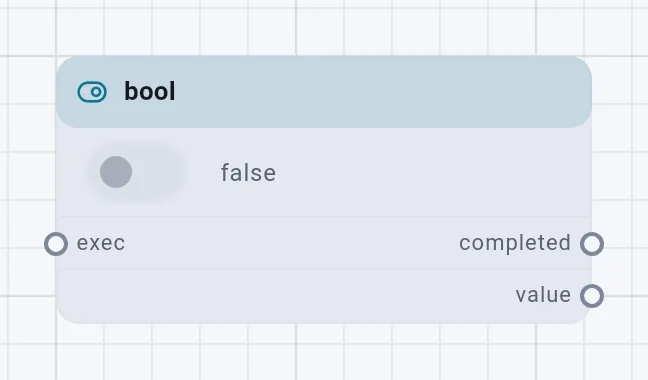
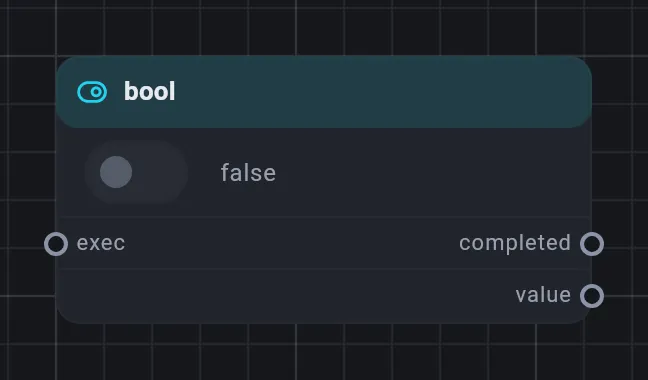
Holds a bool for the rest of the board to read.
Wire value into whatever needs it. Its exec lets it sit in the story rather than only hang off it; left unwired it simply holds its value. Its data port carries the tag bool, so the editor will only let it join something that expects the same thing — or something that expects anything at all.
On the card: the truth, default false.
Takes
| Port | Carries | Meaning |
|---|---|---|
exec |
flow |
The way in. |
Answers
| Port | Carries | Meaning |
|---|---|---|
completed |
flow |
Taken when the node has run. |
value |
bool |
The truth typed on the card. |
String
Section titled “String”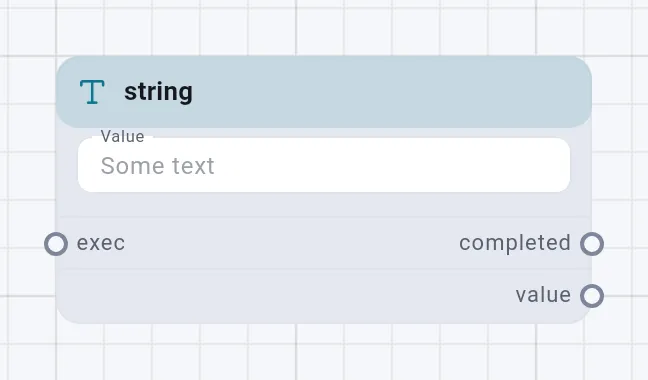
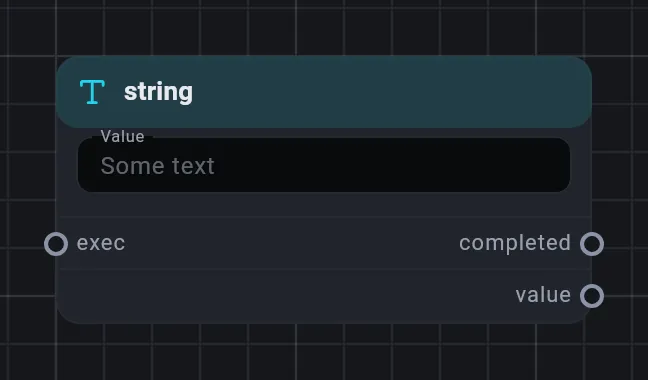
Holds a string for the rest of the board to read.
Wire value into whatever needs it. Its exec lets it sit in the story rather than only hang off it; left unwired it simply holds its value. Its data port carries the tag string, so the editor will only let it join something that expects the same thing — or something that expects anything at all.
On the card: the text.
Takes
| Port | Carries | Meaning |
|---|---|---|
exec |
flow |
The way in. |
Answers
| Port | Carries | Meaning |
|---|---|---|
completed |
flow |
Taken when the node has run. |
value |
string |
The text typed on the card. |
List of numbers
Section titled “List of numbers”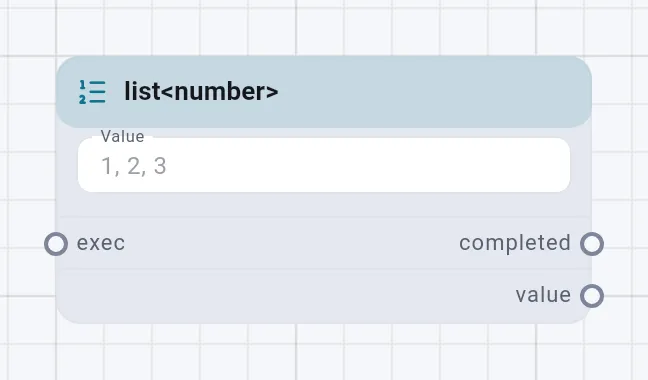
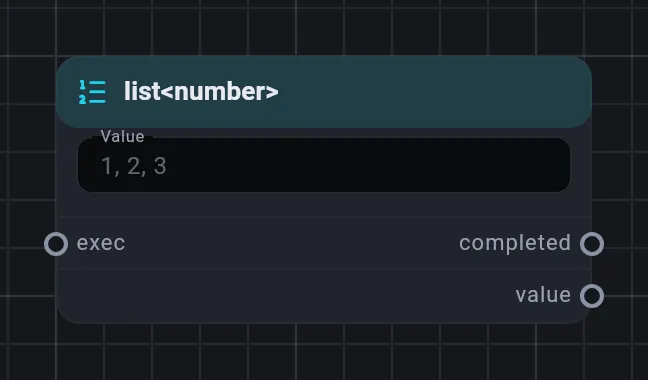
Holds a list<number> for the rest of the board to read.
Wire value into whatever needs it. Its exec lets it sit in the story rather than only hang off it; left unwired it simply holds its value. Its data port carries the tag numberList, so the editor will only let it join something that expects the same thing — or something that expects anything at all.
On the card: the list, as list<number>.
Takes
| Port | Carries | Meaning |
|---|---|---|
exec |
flow |
The way in. |
Answers
| Port | Carries | Meaning |
|---|---|---|
completed |
flow |
Taken when the node has run. |
value |
list<number> |
The list typed on the card. |
List of bools
Section titled “List of bools”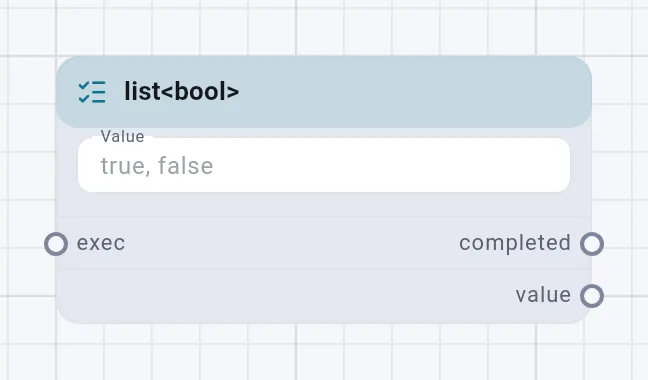
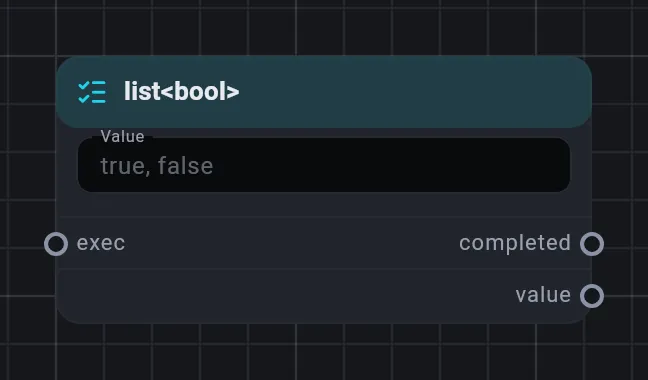
Holds a list<bool> for the rest of the board to read.
Wire value into whatever needs it. Its exec lets it sit in the story rather than only hang off it; left unwired it simply holds its value. Its data port carries the tag boolList, so the editor will only let it join something that expects the same thing — or something that expects anything at all.
On the card: the list, as list<bool>.
Takes
| Port | Carries | Meaning |
|---|---|---|
exec |
flow |
The way in. |
Answers
| Port | Carries | Meaning |
|---|---|---|
completed |
flow |
Taken when the node has run. |
value |
list<bool> |
The list typed on the card. |
List of strings
Section titled “List of strings”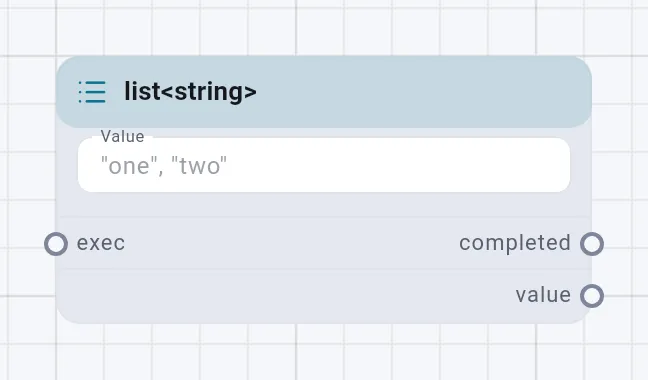
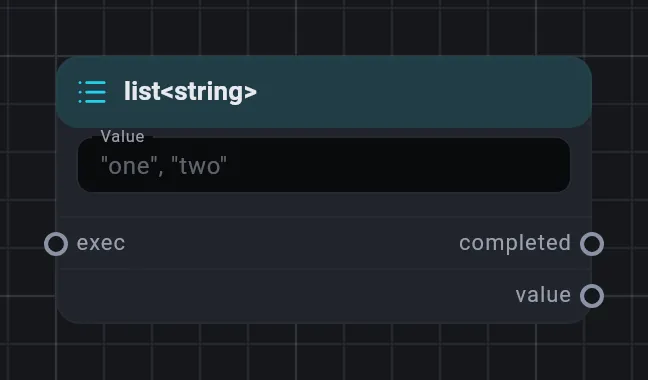
Holds a list<string> for the rest of the board to read.
Wire value into whatever needs it. Its exec lets it sit in the story rather than only hang off it; left unwired it simply holds its value. Its data port carries the tag stringList, so the editor will only let it join something that expects the same thing — or something that expects anything at all.
On the card: the list, as list<string>.
Takes
| Port | Carries | Meaning |
|---|---|---|
exec |
flow |
The way in. |
Answers
| Port | Carries | Meaning |
|---|---|---|
completed |
flow |
Taken when the node has run. |
value |
list<string> |
The list typed on the card. |
Random number
Section titled “Random number”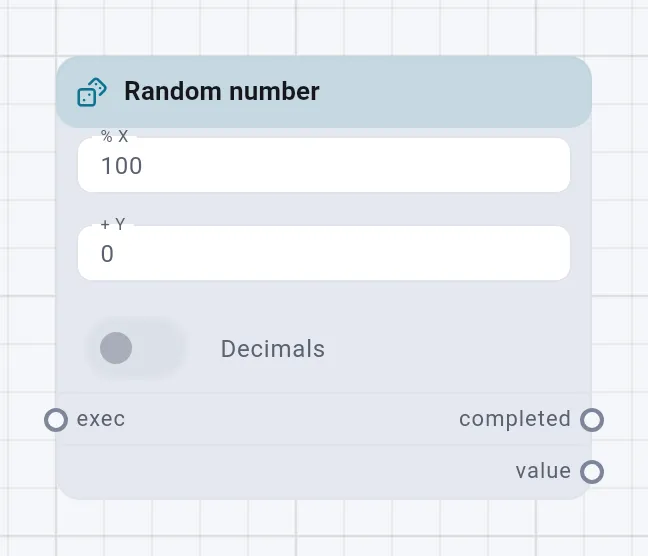
A number nobody chose.
% X is how many numbers are in the range and + Y is where it starts, so a six-sided die is 6 and 1. Turn on decimals and it answers with a fraction from the same range.
It rolls again every time the flow reaches it.
On the card: % X — default 100; + Y — default 0; Decimals — answer with a fraction from the same range, default false.
Takes
| Port | Carries | Meaning |
|---|---|---|
exec |
flow |
The way in. |
Answers
| Port | Carries | Meaning |
|---|---|---|
completed |
flow |
Taken when the node has run. |
value |
any |
A fresh number every time the flow arrives. |
Random string
Section titled “Random string”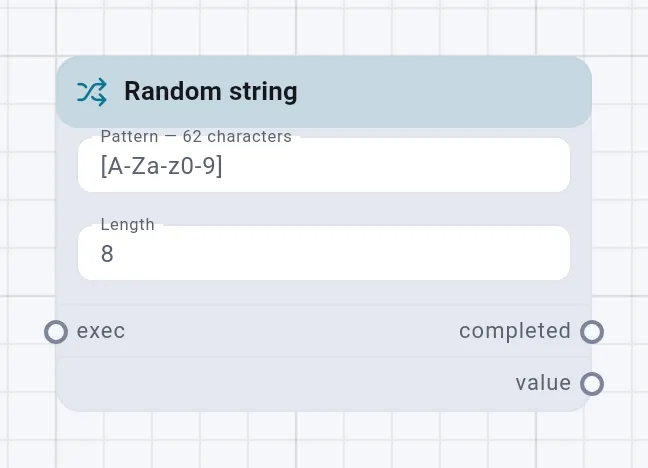
A string nobody chose.
The pattern is tried against every printable character on its own, and the ones it matches are what the string is drawn from — [A-Za-z0-9] for alphanumeric, [0-9a-f] for hex. An empty pattern means all of them.
A pattern that matches nothing gives an empty string, which is the quieter answer than a failure mid-story.
On the card: Pattern — default [A-Za-z0-9]; Length — default 8.
Takes
| Port | Carries | Meaning |
|---|---|---|
exec |
flow |
The way in. |
Answers
| Port | Carries | Meaning |
|---|---|---|
completed |
flow |
Taken when the node has run. |
value |
any |
A fresh string every time the flow arrives. |
Read more: Regular expression character classes
Script
Section titled “Script”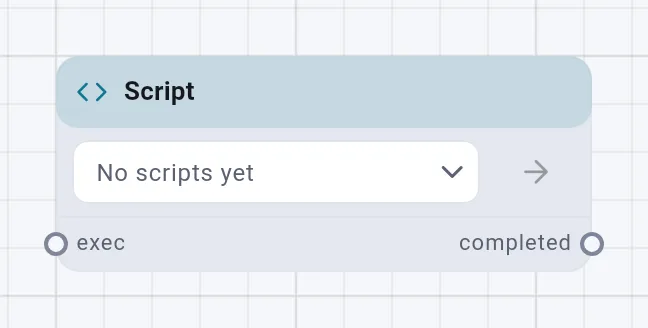
Runs a Python file, and publishes what it assigned.
Pick the script, then describe its two shapes as JSON — {hp: number} — and the node grows a port per name. Inputs arrive in Python as globals of that name; assign the output names and they come back out.
Double-click to write the script, and to try it in the console beside it. The file is a real .py in the project, so a snippet can be shared by as many nodes as want it.
It shows nothing on its own. Wire an Output node to its outputs to put them on screen.
On the card: Script; Inputs; Outputs; Test inputs — values to run the script with from the editor, without a board.
Takes
| Port | Carries | Meaning |
|---|---|---|
exec |
flow |
The way in. |
Answers
| Port | Carries | Meaning |
|---|---|---|
completed |
flow |
Taken when the script has run. |
Plus one input per name in Inputs and one output per name in Outputs, typed as the shape says.
Read more: Python scripting · The Python API
Get variable
Section titled “Get variable”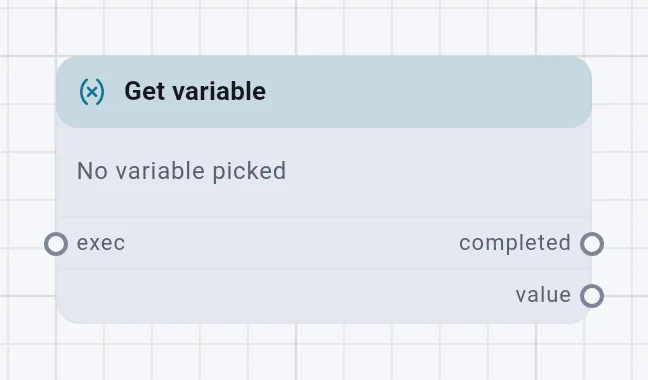
Reads a console variable onto value.
Console variables are declared on the project’s variables page — a name, a type and a default — and are set anywhere and read anywhere, across boards and saves, with no wire between. This is the reading half; a Set variable node or a Script node’s cvar_set is the writing half.
It takes the flow rather than being pulled, so that it always answers what the variable holds now: put it in the story after whatever sets the variable, and wire value onwards from there.
On the card: Variable.
Takes
| Port | Carries | Meaning |
|---|---|---|
exec |
flow |
The way in. |
Answers
| Port | Carries | Meaning |
|---|---|---|
completed |
flow |
Taken when the node has run. |
value |
any |
What the variable holds now, typed as the variable is. |
Read more: Console variables · The twelve types and the coercion rule
Set variable
Section titled “Set variable”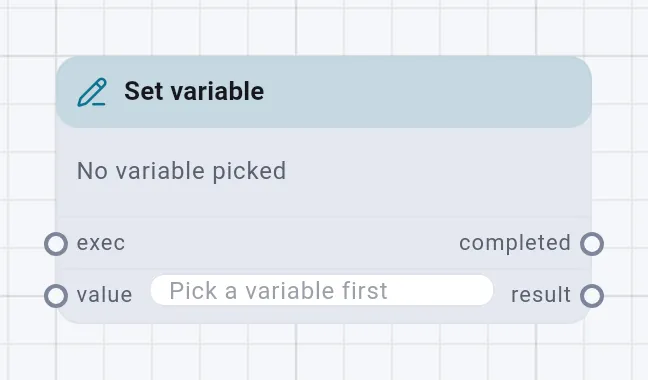
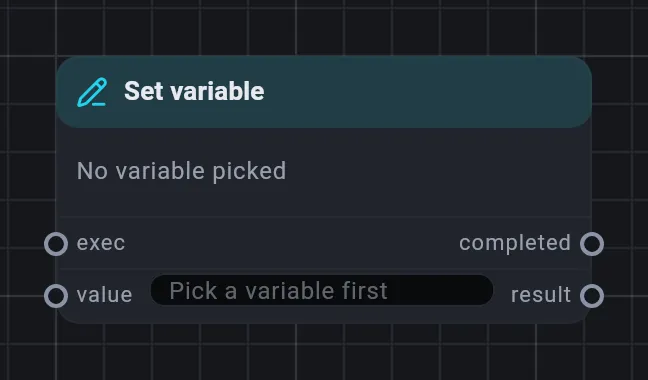
Sets a console variable.
Wire a value into value, or type one on the card; the wire wins when both are there. The value has to be the variable’s type — a whole number for an int, true or false for a bool — and one that is not ends the run with a message naming this node, rather than being bent to fit.
result is what the variable holds after the write.
On the card: Variable; Value.
Takes
| Port | Carries | Meaning |
|---|---|---|
exec |
flow |
The way in. |
value |
any |
What to write. A wire beats the card; a value of the wrong type ends the run naming this node. |
Answers
| Port | Carries | Meaning |
|---|---|---|
completed |
flow |
Taken when the node has run. |
result |
any |
What the variable holds after the write. |
Read more: Console variables · The twelve types and the coercion rule
Component
Section titled “Component”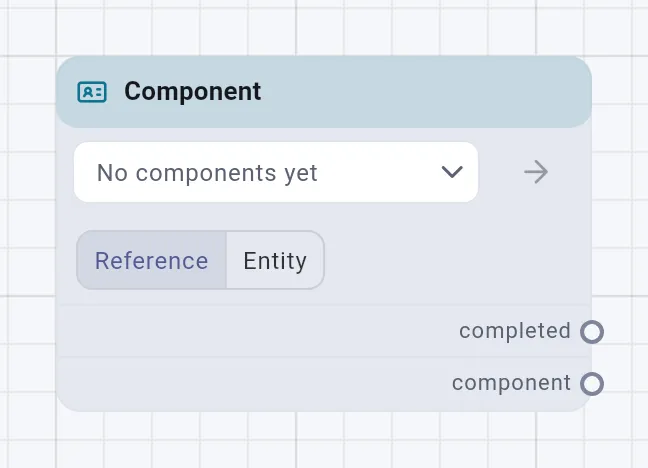
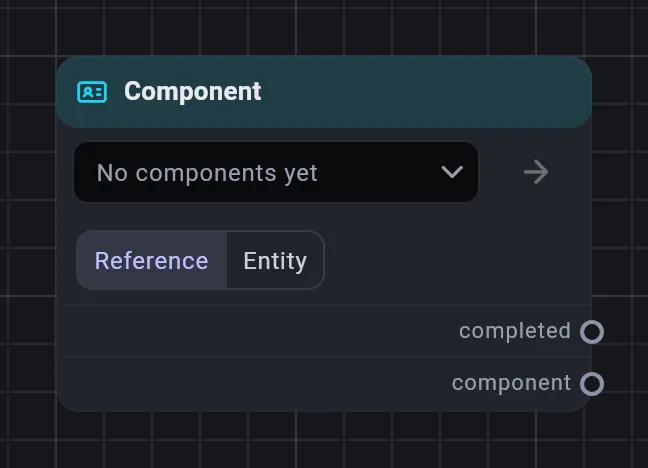
Reads a component into the board — a character, an item, a room.
Drag one out of the file tree and drop it on the canvas, or pick it here. Every attribute gets its own output, typed the way the component declares it, so a number joins a number and text joins text.
component carries the whole thing as one value, for passing along rather than picking apart.
It has two modes. In Reference it is a window onto the file: outputs, and nothing else.
In Entity it stops being a window and makes the story a thing: one entity, kept for the length of the campaign under the name you give it. Every attribute grows an input, so what happens earlier in the story can set it. Two nodes with two names are two independent swords; a node on a later board with the same name is the same sword.
Either way it reads the file and never writes to it. The component itself is edited where it lives.
On the card: Component; Entity mode — Reference off, Entity on, default false; Name — the entity’s name, in Entity mode.
Answers
| Port | Carries | Meaning |
|---|---|---|
completed |
flow |
Taken when the node has run. In Entity mode this is when the entity exists. |
component |
component |
The whole component as one value, for passing along rather than picking apart. |
Plus one output per attribute, typed as the component declares it — and in Entity mode one input per attribute as well.
Read more: Components and entities
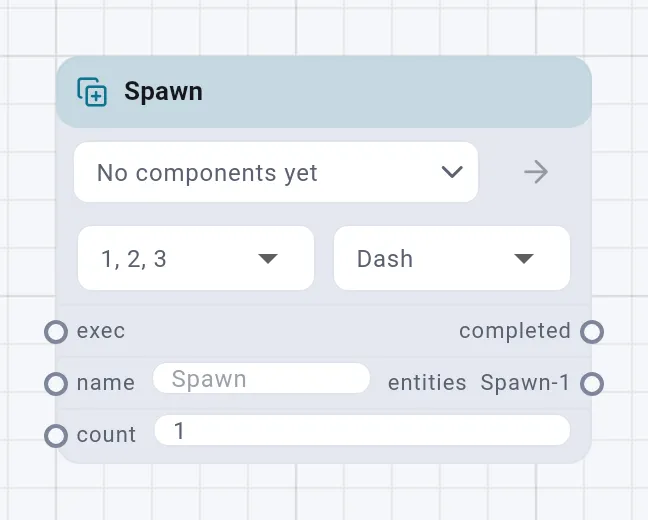
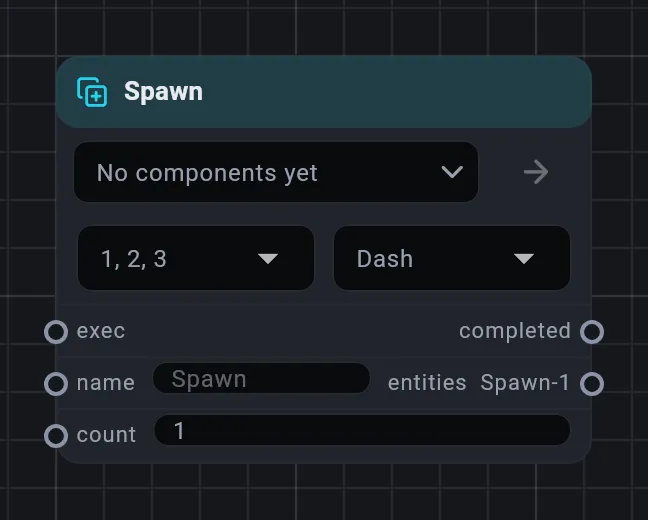
Makes many entities of one component at once — six goblins, a hand of cards, a shelf of potions.
Pick the component, say how many, and choose how they are told apart: numbers or letters, and what goes between. Goblin with numbers and a dash makes Goblin-1, Goblin-2, and so on.
entities carries their names as a list of text. That is how anything else reaches them: a Script node can walk it and give each one its own hit points, and a Component node set to Entity with that name is that goblin.
The names it makes depend only on what is on the node, so coming back to it finds the goblins it already made rather than six more. A second wave wants a different name, which is what the name input is for.
It runs when the flow reaches it, so anything reading entities has to be wired after completed — a Script hanging off it with nothing flowing in reads nothing.
On the card: Component; Name; How many — default 1; Numbering — numbers or letters, default numbers; Separator — what goes between the stem and the number, default dash.
Takes
| Port | Carries | Meaning |
|---|---|---|
exec |
flow |
The way in. |
name |
string |
The stem the names are built on. A wire beats the card. |
count |
number |
How many to make. A wire beats the card. |
Answers
| Port | Carries | Meaning |
|---|---|---|
completed |
flow |
Taken when the node has run. |
entities |
list<string> |
Their names, as a list of text. |
Read more: Components and entities
Delete Entity
Section titled “Delete Entity”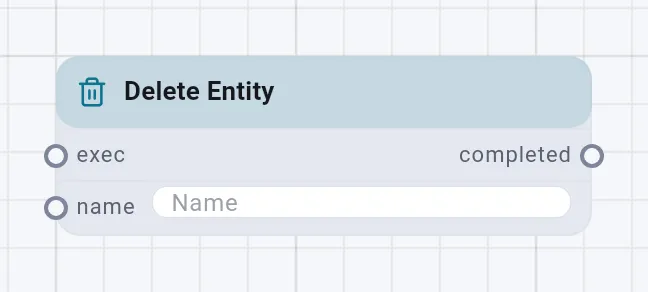
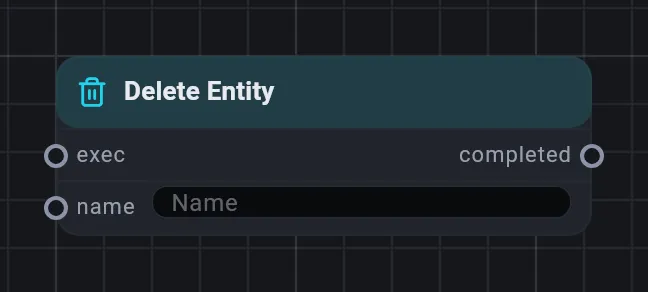
Forgets one entity: the goblin is dead, the potion is drunk, the sword was left behind.
Name it on the card, or wire a name in — a name from upstream wins, which is how a loop clears out everything a Spawn node made.
It removes the entity from the campaign and nothing from the project: the component file it was made from is untouched, and a Component node set to Entity naming it later simply makes a fresh one from that file.
A name that names nothing is not an error — it removes nothing and the story carries on. Ask an Entity Exists node first if that matters.
On the card: Name.
Takes
| Port | Carries | Meaning |
|---|---|---|
exec |
flow |
The way in. |
name |
string |
Which entity to forget. A wire beats the card; a name nothing answers to removes nothing. |
Answers
| Port | Carries | Meaning |
|---|---|---|
completed |
flow |
Taken when the node has run. |
Read more: Components and entities
Entity Exists
Section titled “Entity Exists”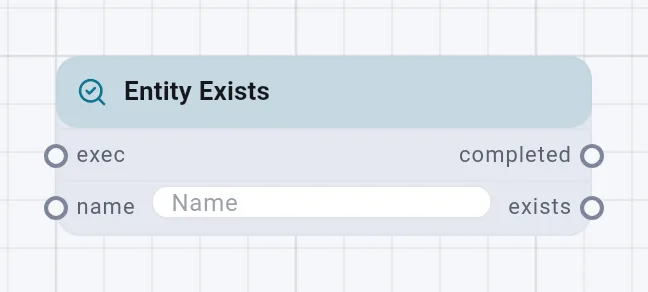
Asks whether the campaign has an entity under a name, and answers true or false.
Name it on the card, or wire a name in — a name from upstream wins.
It asks about entities, not about components. False means the story has not made this one, or has deleted it; the component file may be sitting there all the same, and a Component node set to Reference would read it happily.
It runs when the flow reaches it, so anything reading exists has to be wired after completed — an If node hanging off it with nothing flowing in reads nothing.
On the card: Name.
Takes
| Port | Carries | Meaning |
|---|---|---|
exec |
flow |
The way in. |
name |
string |
Which entity to ask about. A wire beats the card. |
Answers
| Port | Carries | Meaning |
|---|---|---|
completed |
flow |
Taken when the node has run. |
exists |
bool |
Whether the campaign has one under that name. |
Read more: Components and entities
Chance
Section titled “Chance”Dice roller
Section titled “Dice roller”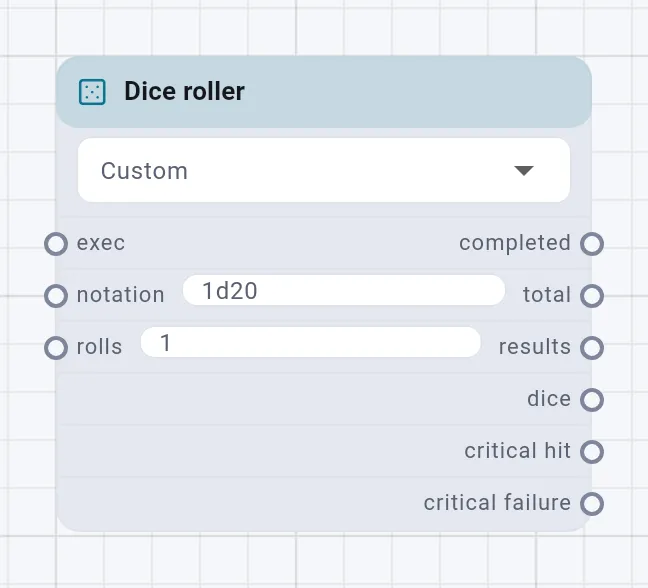
Rolls dice notation, the way a table would.
2d6+4 is two six-sided dice and four; 4d6kh3 keeps the highest three of four; 1d20+1d4+2 chains a d20, a d4 and a bonus. Keep or drop with kh, kl, dh, dl. Pick a preset, or type your own.
Rolls is how many times over. total is the sum of everything, results one total per roll, dice every face that counted. The two criticals are a natural twenty or a natural one on the first dice term.
A wire into notation or rolls beats what is typed on the card.
On the card: Notation — type it, or pick one of the presets, default 1d20; Rolls — default 1.
Takes
| Port | Carries | Meaning |
|---|---|---|
exec |
flow |
The way in. |
notation |
string |
The dice notation. A wire beats the card. |
rolls |
number |
How many times over. A wire beats the card. |
Answers
| Port | Carries | Meaning |
|---|---|---|
completed |
flow |
Taken when the node has run. |
total |
number |
The sum of everything. |
results |
list<number> |
One total per roll. |
dice |
list<number> |
Every face that counted. |
critical hit |
bool |
A natural twenty on the first term. |
critical failure |
bool |
A natural one on the first term. |
Read more: Dice notation, explained
Percentile check
Section titled “Percentile check”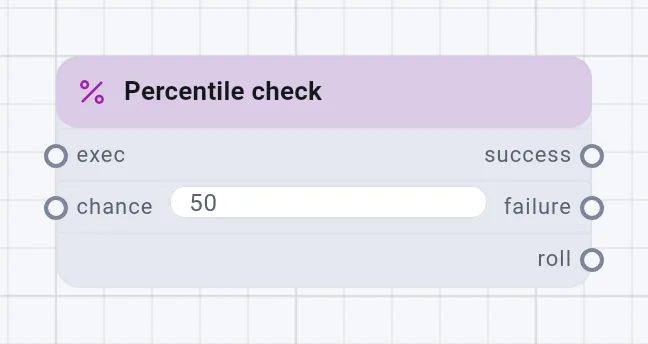
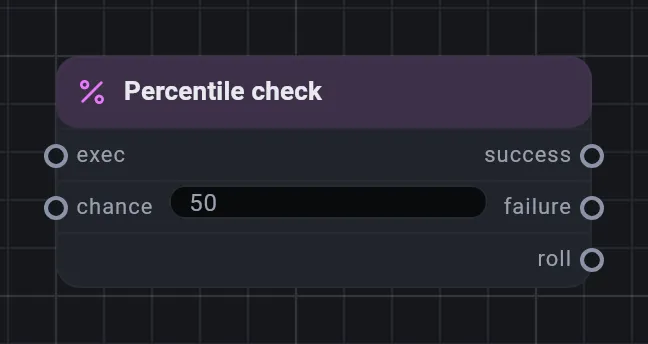
Rolls a d100 against a chance out of a hundred.
At or under the chance is success, over it is failure — so 0 never succeeds and 100 always does. What was rolled comes out of roll, for a passage that wants to say how close it was.
A wire into chance beats what is typed on the card.
On the card: Chance — default 50.
Takes
| Port | Carries | Meaning |
|---|---|---|
exec |
flow |
The way in. |
chance |
number |
Out of a hundred. A wire beats the card. |
Answers
| Port | Carries | Meaning |
|---|---|---|
success |
flow |
Taken at or under the chance. |
failure |
flow |
Taken over it. |
roll |
number |
What the d100 came up. |
Read more: Percentile systems, in the dice notation guide
Weighted branch
Section titled “Weighted branch”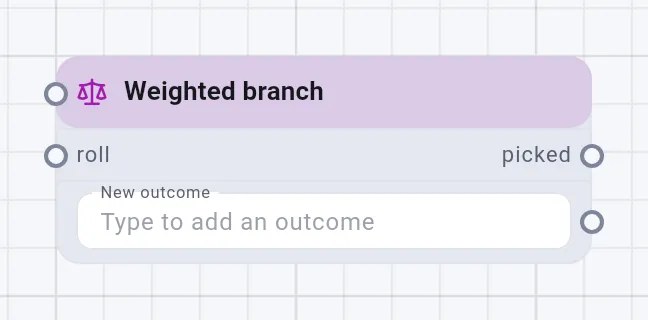
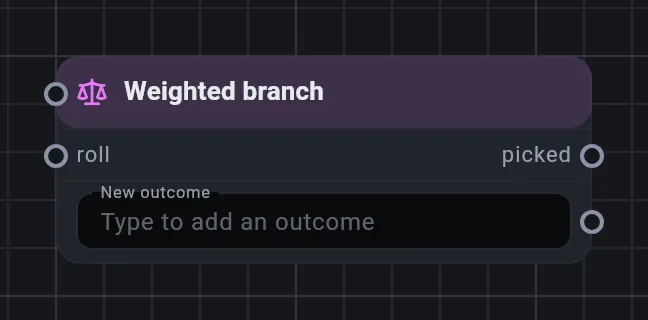
Sends the flow down one branch of several, drawn by weight.
Each row is an outcome and how likely it is against the others — 60 / 30 / 10, or 6 / 3 / 1, which is the same branch. Type into the last row and another appears beneath it. A row with no name, or a weight of nothing, is never drawn.
picked is the name of the row that won. Wire a number from 0 to 100 into roll to decide with it instead of rolling.
On the card: one row per outcome, name and weight.
Takes
| Port | Carries | Meaning |
|---|---|---|
in |
flow |
The way in. |
roll |
number |
Optional: a number from 0 to 100 to decide with instead of rolling. |
Answers
| Port | Carries | Meaning |
|---|---|---|
picked |
string |
The name of the row that won. |
outcome … |
flow |
One way out per row, drawn by weight. Type into the last row and another appears. |
Math and logic
Section titled “Math and logic”Operator
Section titled “Operator”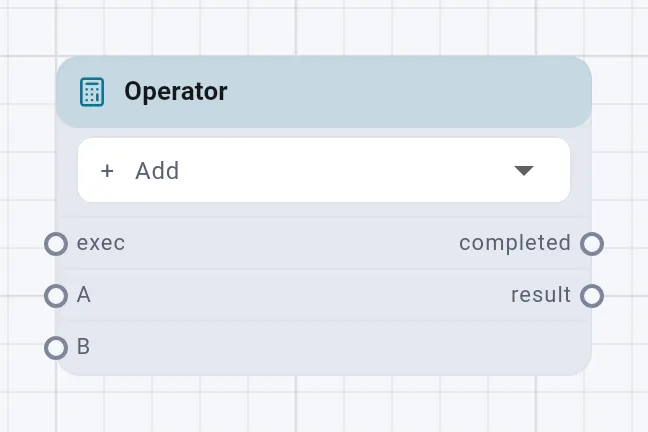
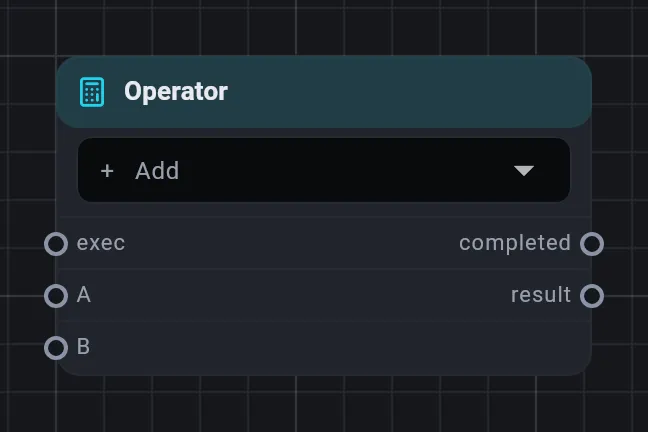
Adds, subtracts, multiplies or divides the two numbers wired into it.
Both sides only take numbers. Dividing by zero gives an infinity rather than stopping the board — a story that fell over because a wire happened to carry a zero would be worse than one that carries an odd number.
On the card: Operation — add, subtract, multiply or divide, default add.
Takes
| Port | Carries | Meaning |
|---|---|---|
exec |
flow |
The way in. |
A |
number |
The left-hand number. |
B |
number |
The right-hand number. |
Answers
| Port | Carries | Meaning |
|---|---|---|
completed |
flow |
Taken when the node has run. |
result |
number |
The answer; dividing by zero gives an infinity. |
Comparator
Section titled “Comparator”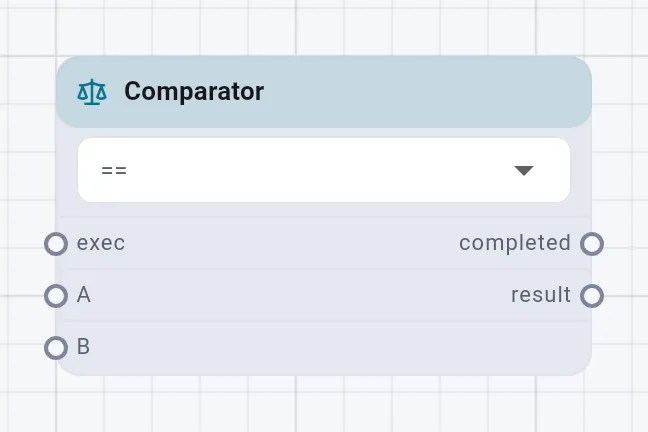
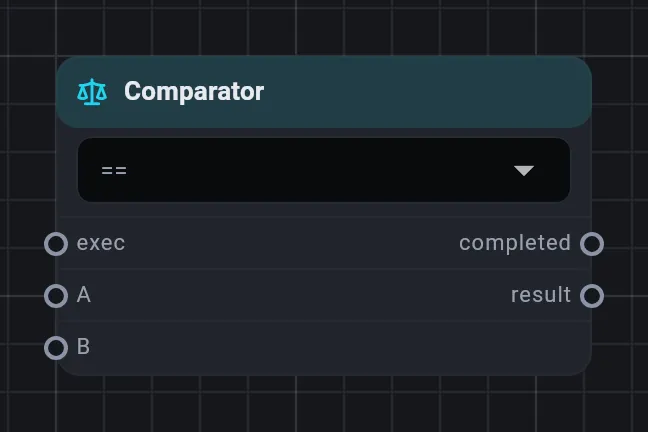
Compares the two values wired into it and answers true or false.
Neither side declares a type, so anything may be plugged in. Equality reads both as text — 42 and “42” are equal here for the same reason they are one case on a Switch. Ordering is only answered for two numbers or two pieces of text; anything else compares as false.
Its result is what an If node is waiting for.
On the card: Compare — equal, not equal, less, greater, and the two or-equals, default equal.
Takes
| Port | Carries | Meaning |
|---|---|---|
exec |
flow |
The way in. |
A |
any |
The left-hand value. |
B |
any |
The right-hand value. |
Answers
| Port | Carries | Meaning |
|---|---|---|
completed |
flow |
Taken when the node has run. |
result |
bool |
True or false, for an If. |
Offered on a macro’s own canvas only, where a board would have its Start and its Ends. Everything above is offered on both.
Macro In
Section titled “Macro In”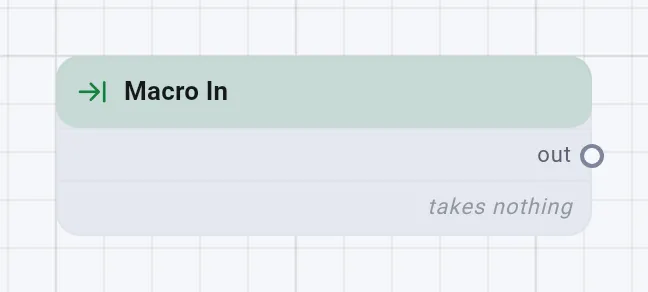
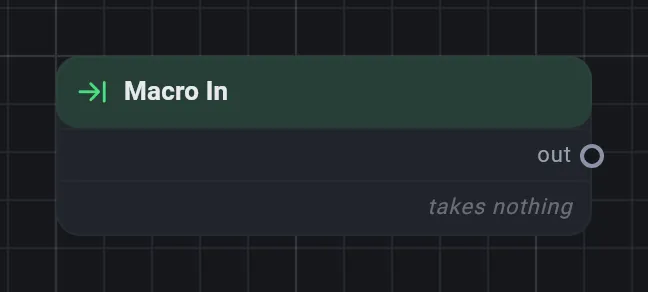
Where this macro begins, and what it takes.
Double-click to say what it takes — a name and a type per row — and it grows a port per name, carrying what the board that called the macro wired in or typed on the card.
A macro has exactly one of these, and it stands where a Start would.
On the card: Takes.
Answers
| Port | Carries | Meaning |
|---|---|---|
out |
flow |
The single wire the macro begins by. |
Plus one output per name in Takes, typed as the shape says.
Read more: Macros
Macro Out
Section titled “Macro Out”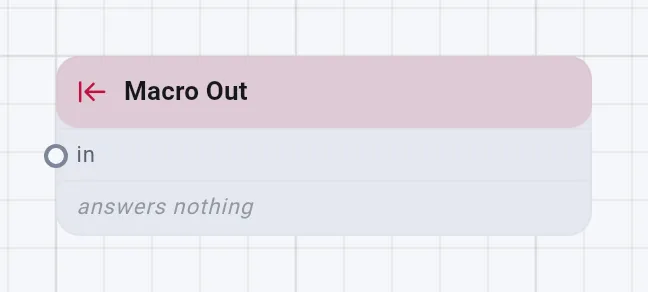
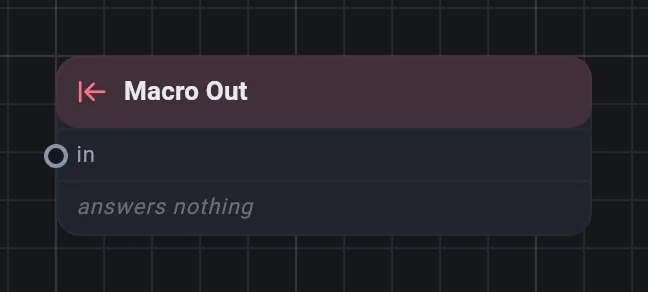
Where this macro ends, and what it answers.
Double-click to say what it answers — a name and a type per row — and it grows a port per name. What is wired in here is what the Macro node on the calling board publishes, and the flow carries on from there.
A macro has exactly one of these, and it stands where an End would.
On the card: Answers.
Takes
| Port | Carries | Meaning |
|---|---|---|
in |
flow |
Any number of wires; every branch inside the macro can finish here. |
Plus one input per name in Answers, typed as the shape says.
Read more: Macros